REYNOLDS ROOFING & ROUGHCASTING LTD

Roughcasting in Kilmarnock

Reynolds Roofing & Roughcasting are family-run roughcasters covering Kilmarnock and the villages around it from our base in Catrine. We carry out traditional wet dash harling, dry dash and pebbledash, silicone and smooth rendering, and roughcast repairs on houses across the town.

Roughcasting is one of our two core trades. We do not subcontract it, and the team that quotes your job is the team that carries it out. See all our roughcasting services across Ayrshire, or if the roof needs attention too, our roofers in Kilmarnock can quote for both.

    Roughcast and Render on Kilmarnock Homes

    A great deal of Kilmarnock’s housing was roughcast or dry dashed from new, particularly the interwar and post-war estates that make up much of the town. That finish has a long life but not an unlimited one, and a lot of it is now at the stage where it needs either significant repair or renewal.

    Later property from the 1960s and 70s brings a different problem. Some of the render systems used in that period have not aged well, and where they have failed the failure tends to be across whole elevations, not in isolated patches.

    Gable ends go first almost everywhere, because they take the weather with no roof overhang to shelter them. Hollow or blown patches, cracks around windows and sills, and dash coming away near ground level are the usual signs that a wall needs attention.

    The town’s older sandstone and solid-wall property needs a different approach again. Those walls have to be able to dry out, so we choose the finish to suit the wall and do not use the same system on every house.
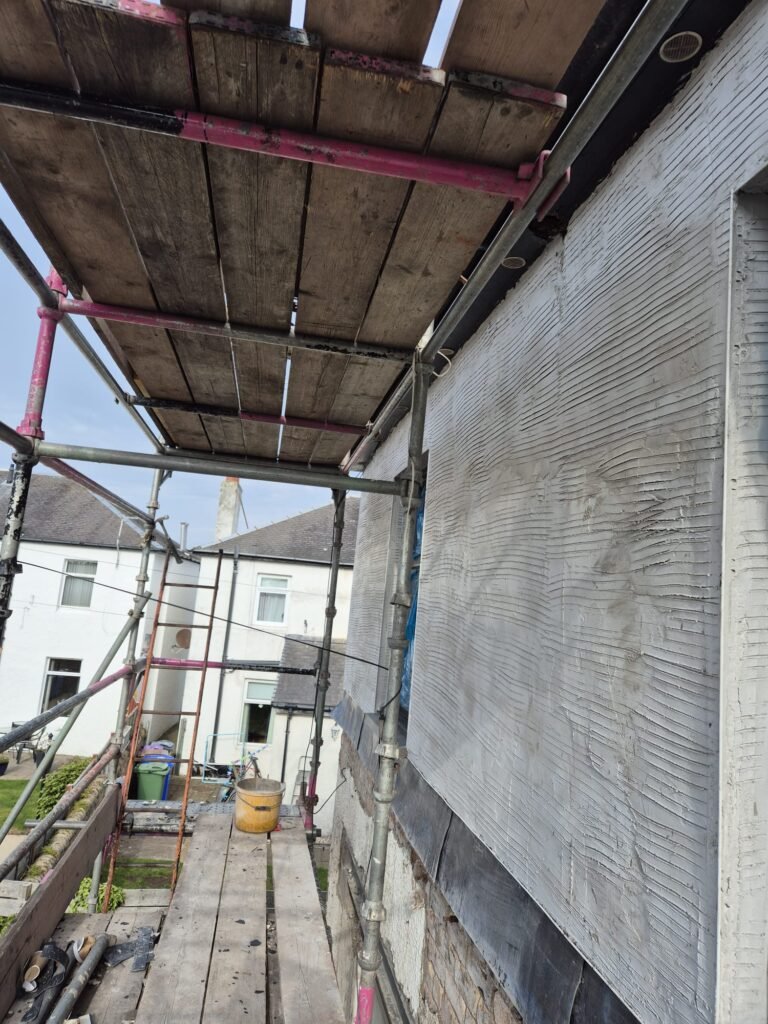
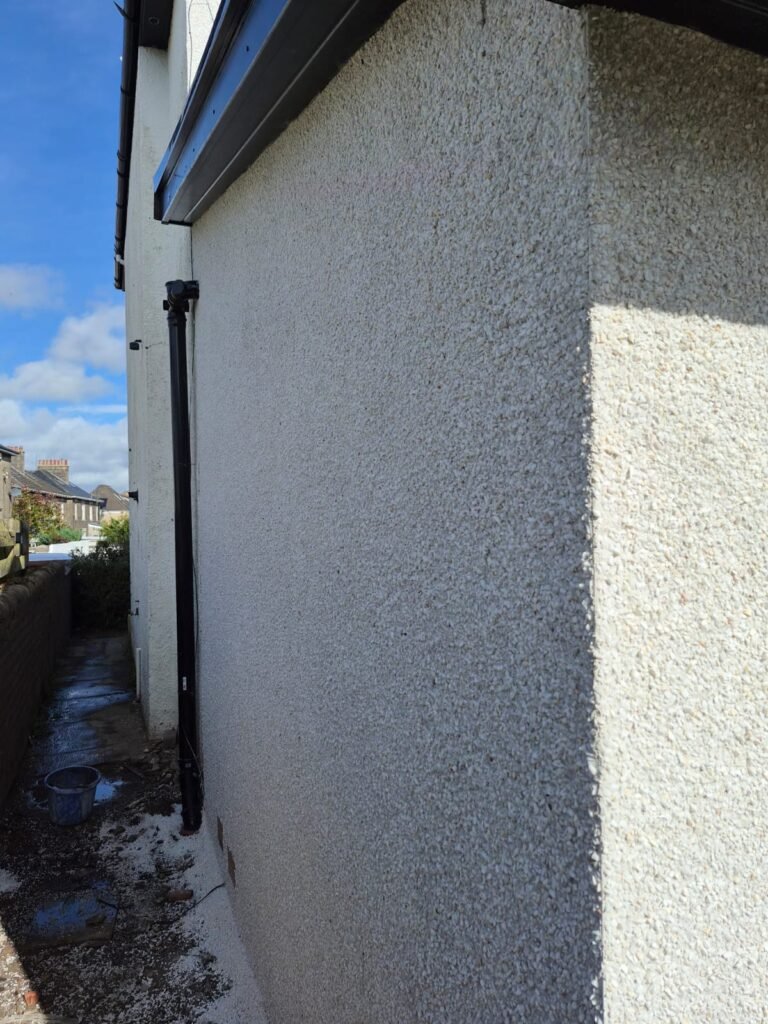
    Roughcasting under way on a house in Kilmaurs, near Kilmarnock
    Roughcasting, Kilmaurs
    Clean white roughcast finish on a house
    Finished roughcast
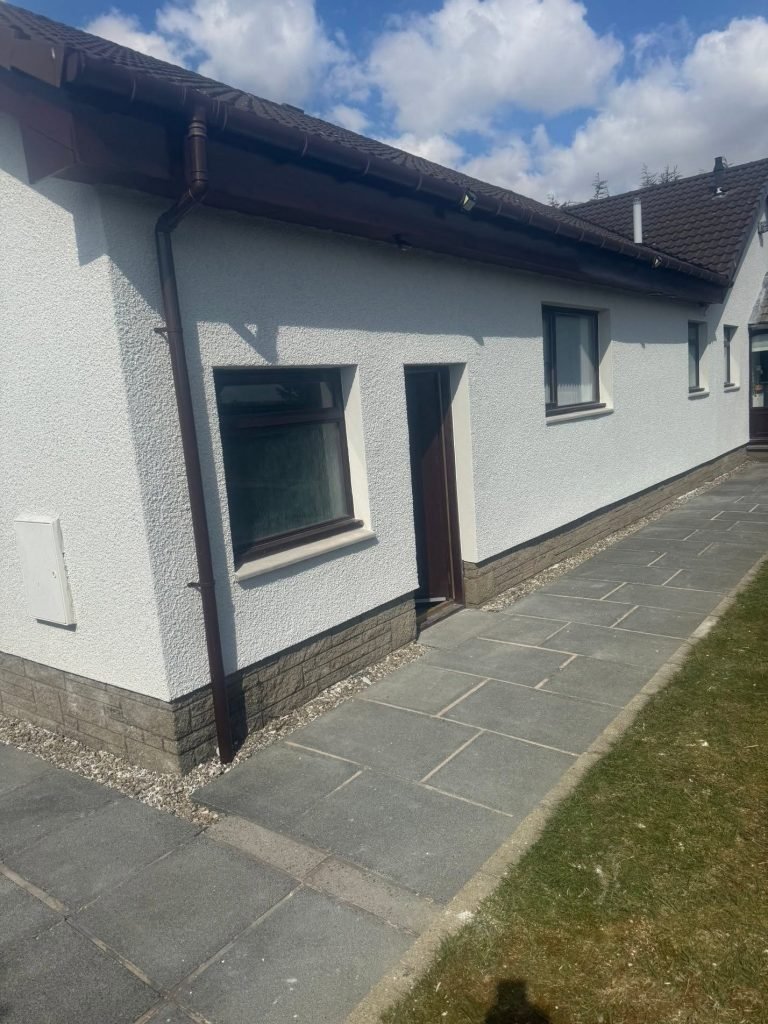
    New roughcast wall finish
    New roughcast wall

    Traditional Roughcast or Silicone Render: Which Suits Your Kilmarnock Home?

    Both have their place, and the right answer depends on the property.

    Traditional wet dash roughcast is hard-wearing, well suited to East Ayrshire weather, and appropriate where you want the house to look as it always has. It is the right choice on most older housing and on streets where a uniform appearance matters, which covers a lot of Kilmarnock’s terraced and semi-detached estates.

    Modern silicone render gives a cleaner, contemporary finish. It is more flexible, so less prone to cracking, and more resistant to dirt and algae, so it stays looking good for longer with less attention. It costs more and it changes the appearance of the property, which not everyone wants.

    We will talk you through both on your own property and tell you which we would choose

    Why Roughcast Fails

    This is worth understanding, because the reason matters more than the symptom.

    Most render failure is a water problem, not a render problem. A blocked or leaking gutter running down one elevation, a failed flashing, a cracked sill, or ground levels built up above the damp course will all saturate a wall, and the render is simply what shows the damage first. Strip it and renew it with the cause still there, and you will be back at the same point in a few years.

    Because we are also roofers in Kilmarnock, we look at the whole picture when we quote. If your roughcast is failing under a gutter run, the guttering is part of the job.

    How Much Does Roughcasting Cost in Kilmarnock?

    Every quote follows a site visit, because the price depends on the wall in front of us. The main things that move it are:

    • The area to be covered and how many elevations are involved.
    • Whether the existing finish has to be stripped or can be worked over.
    • The condition of the wall underneath once the old finish is off.
    • Scaffolding and access.
    • The finish you choose. Silicone render costs more than traditional wet dash.
    • Any gutter, flashing or sill repairs needed to stop the problem returning.

    Site visits and written quotes are free, with no obligation.

    Areas of Kilmarnock We Cover

    We work across the whole town and the KA6, KA7 and KA8 postcodes, including Seafield, Doonfoot, Alloway, Belmont, Castlehill, Forehill, Holmston, Kincaidston, Newton-on-Ayr, Wallacetown, Craigie, Heathfield, Whitletts, Dalmilling and Lochside.

    We also cover Prestwick, Troon, Monkton, Coylton, Mossblown, Annbank, Tarbolton, Maybole and Dunure.

    Further inland? See all the areas we cover, including roughcasting in Kilmarnock.

    Free Quotes for Roughcasting in Kilmarnock

    Call 07936 716919 or send an enquiry and we will arrange a free site visit.

    Roughcasting in Kilmarnock: Frequently Asked Questions

    Do you cover all of Kilmarnock?

    Yes. We cover every part of the town and the surrounding villages, and we do not charge extra for travel. Our pricing is the same across all the areas we cover.

    It depends on the size of the house, whether the old finish has to come off, access, and the finish you choose. We give a written quote after a free site visit, so you know the figure before deciding anything.

    Yes, but not in frost or heavy rain. Render applied in freezing or saturated conditions does not cure properly. In the colder months we schedule around the forecast and protect fresh work, so start dates are a little more flexible than in summer.

    Yes. This is common on terraced and semi-detached houses. We finish to a clean line at the boundary. The new side will look fresher than the old one until it weathers in, so it is often worth asking your neighbour whether they want theirs done at the same time.

    Like-for-like repair or renewal normally does not need permission. Changing the appearance of the house, for example from roughcast to smooth render or to a different colour, can need consent if the property is listed, in a conservation area, or part of a shared block. Check with East Ayrshire Council before committing, and we can talk it through at the site visit.

    A properly applied traditional roughcast on a sound wall can last decades. Its life depends heavily on the wall behind it staying dry, which is why guttering and flashing problems shorten it dramatically.

    Sometimes, if the existing finish is sound and well bonded. If it is hollow, cracked or lifting, applying over the top just puts new material onto a failing base. We check by sounding the wall before advising.

    It depends what you want from it. It is more flexible, more resistant to algae and dirt, and needs less attention over time. It also changes the look of the property and costs more up front. On an exposed elevation, or a house you plan to stay in long term, it usually justifies itself.

    Yes. Single-elevation work is common, particularly on gable ends, which take the worst of the weather. Bear in mind a newly finished elevation will look newer than the others until it weathers in.